
Ross Giles Tree Surgery · Planks & Milling
Timber Milling: Giving Felled Trees a Useful Second Life
A felled tree can still have a future. Discover how suitable trunks can become useful planks, why on-site milling may help where access is restricted, and what to consider before planning a timber project.
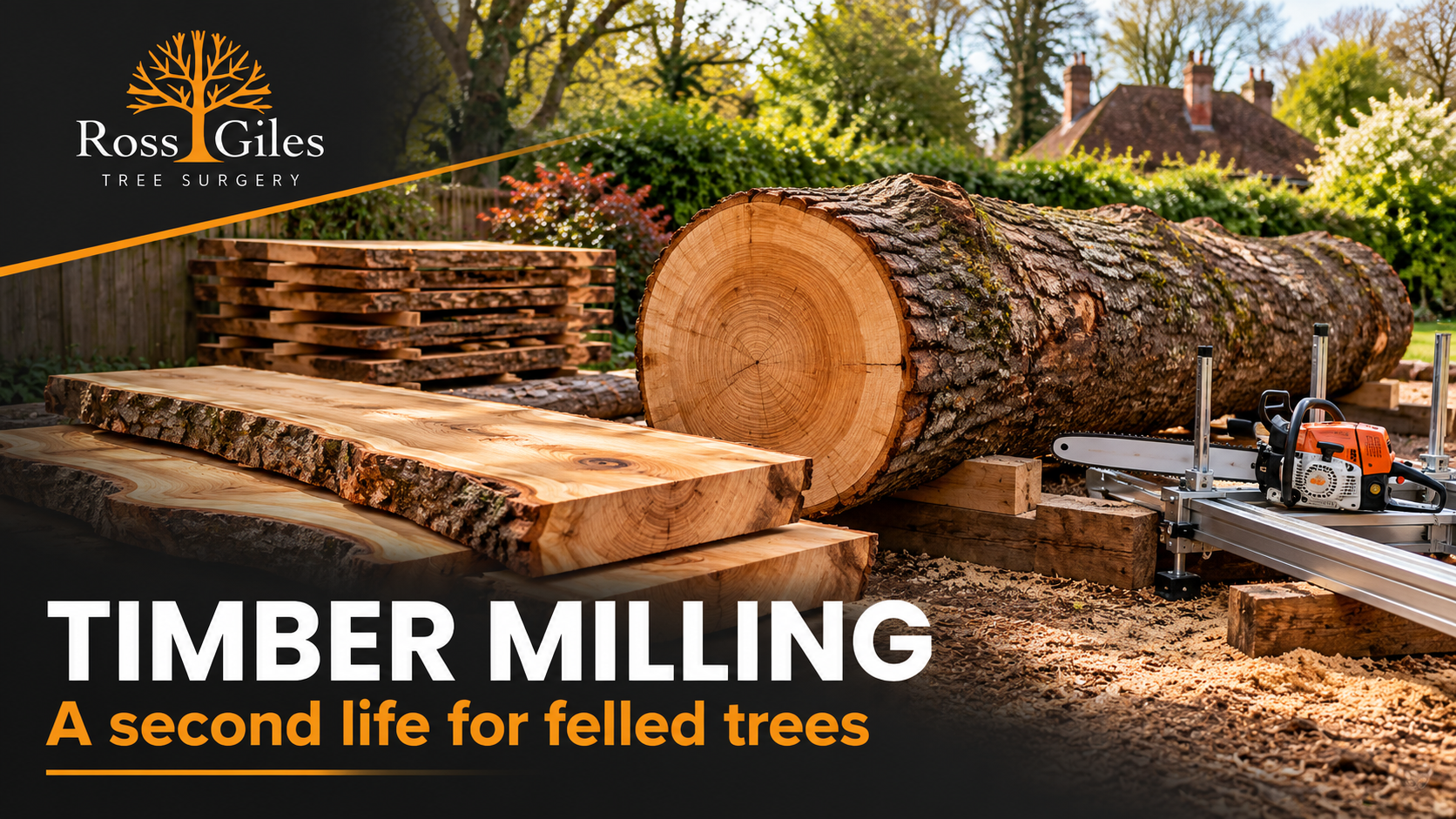
Make More of a Felled Tree
When a large tree has been felled, its trunk may offer possibilities beyond disposal or firewood. Suitable sections can be converted into boards that retain the grain, colour and individual character of the original tree.
Timber milling provides a way to explore that potential. Ross Giles Tree Surgery can arrange chainsaw milling on site where vehicle access is restricted, or discuss removing suitable timber for upcycling. The practical choice depends on the log and its location.
What Is Timber Milling?
Milling converts a trunk or log into usable sections, such as planks or slabs. A chainsaw mill guides the saw along the timber to produce cuts along its length. The dimensions and condition of the log help determine what can realistically be recovered.
The result is sawn timber rather than a finished product. Depending on its intended use, it may still need drying, machining, sanding and finishing. Planning these stages early helps connect the milling work with the project you have in mind.
On-Site Milling or Timber Removal?
Access can be a deciding factor in timber milling. A trunk behind a property may be difficult to move as a whole, while another location may allow collection. Neither approach should be assumed possible before the site has been assessed.
Milling at Your Property
Portable chainsaw milling may be an option where larger vehicles cannot reach the timber. Suitable access for people and equipment, working space and arrangements for moving the boards still need consideration.
Removal for Upcycling
Where collection is practical, the team can discuss removing suitable timber and upcycling it themselves. Agree what will be collected and whether any boards or other material will remain with you.
Why Consider Reusing Your Timber?
Timber milling can preserve useful material from a tree that has already been felled. Its value lies in matching the available wood to a realistic purpose, rather than assuming every trunk will produce furniture-quality boards.
- Retain a personal connection: Wood from a familiar garden tree can carry meaning into a future project, especially when its history matters to the owner.
- Explore individual character: Grain, colour changes and natural edges may offer visual interest, although knots and other features can also affect usability.
- Make use of existing material: Recovering suitable sections gives you an alternative to treating the entire trunk as waste or cutting it solely for fuel.
- Plan around your project: Discussing the intended use before cutting helps establish sensible board dimensions and allowances for later preparation.
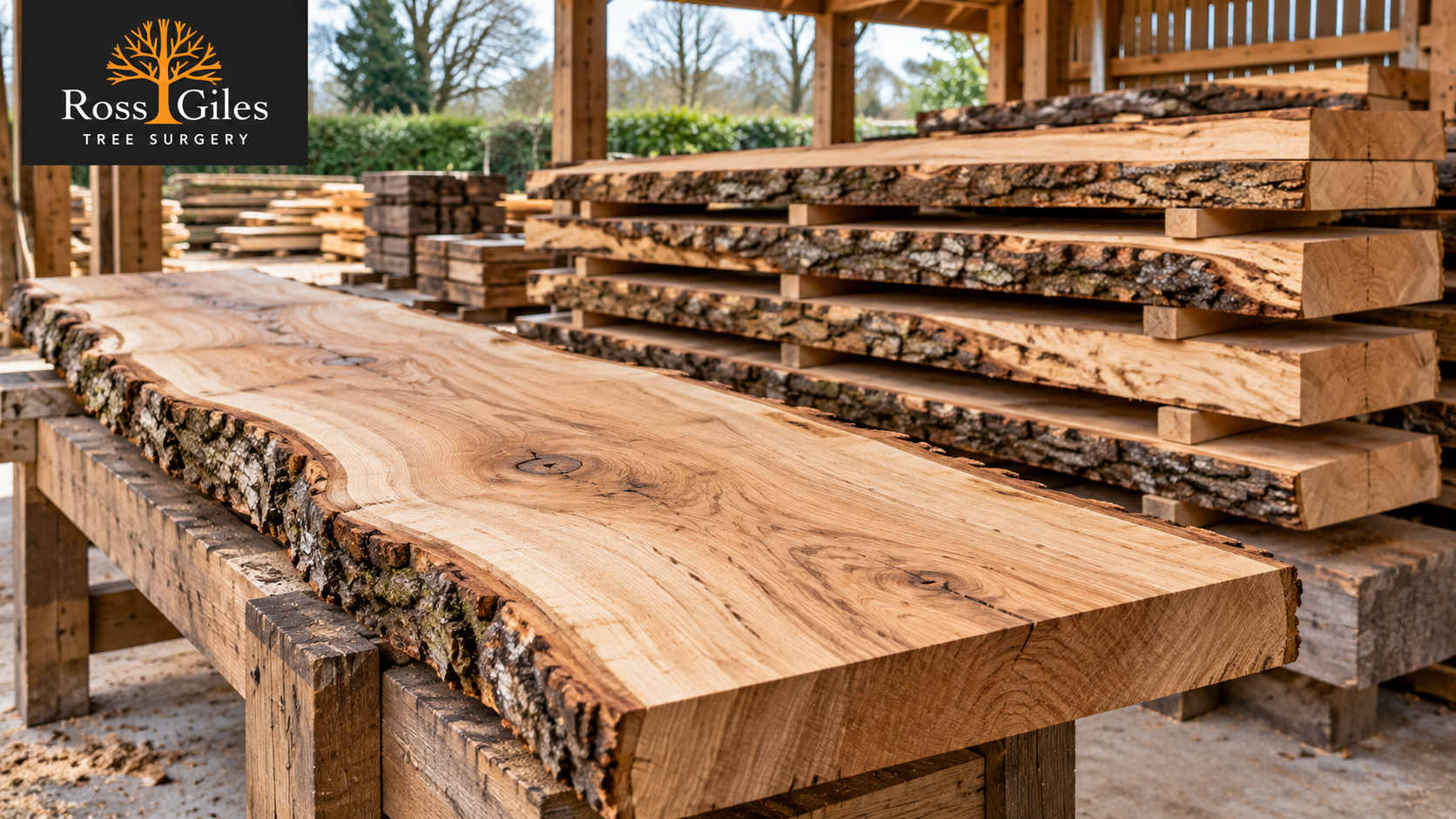
Is Every Trunk Suitable for Milling?
No two logs are identical. Species, size, shape and condition affect the options, while decay, splits or embedded objects can complicate processing. An assessment is more useful than judging suitability from the outside alone.
Timber milling also does not guarantee a particular yield or resale value. Tell the team about known nails, fencing wire or other metal associated with the tree, and discuss your expectations before arranging the work.
Freshly Milled Boards Need Further Planning
Freshly sawn wood can contain substantial moisture. As it dries, its dimensions can change, and movement may include distortion or splitting. The drying approach should suit the species, board thickness and conditions in which the wood will eventually be used.
Avoid assuming that a newly cut plank is ready for an indoor table or shelf. Ask about storage and the next preparation stages. Milling, drying and final manufacture are separate tasks, so confirm which services are included in your arrangement.
What to Include in Your Enquiry
A clear enquiry helps the team assess whether timber milling is practical. Photographs and approximate measurements are useful, provided you can obtain them safely without moving heavy logs.
- Location and access: Describe where the trunk lies, how equipment could reach it and any narrow entrances, slopes or obstacles along the route.
- Log details: Share its approximate length and diameter, the species if known and when it was felled. Mention visible damage or suspected metal.
- Your intended use: Explain whether you hope to retain boards for a project or would prefer to discuss removal and upcycling by the team.
- The proposed arrangement: Ask what cutting, handling and clearance are included, who retains the timber and how any drying or onward transport will be managed.
Explore our planks and milling service or use the contact page to share your project details.
Find Inspiration for Your Felled Timber
For more background, read our article about turning felled timber into useful timber . You can also ask the team about product examples shared on Instagram when discussing ideas for your own wood.
Frequently Asked Questions
Can milling take place where vehicle access is restricted?
On-site chainsaw milling may be possible, depending on access for the equipment, working space and the position of the log. Restricted vehicle access does not automatically rule it out.
Can I use the boards immediately after cutting?
That depends on the application and moisture condition. Many finished projects require drying and further preparation before the boards are ready to use.
Can you remove timber instead of milling it on site?
Ross Giles Tree Surgery can discuss removal and upcycling where the timber and access are suitable. Contact the team with photographs and location details to explore the options.
Explore the Potential in Your Timber
Have a felled trunk you would like to put to use? Explore our timber milling service or contact Ross Giles Tree Surgery to discuss the timber, site access and what you hope to achieve.

