
Ross Giles Tree Surgery · Dorset Garden Care
Hedge Trimming and Reduction in Dorset: A Practical Guide
An overgrown hedge can make a garden feel smaller and harder to maintain. Discover the difference between a routine trim and a larger reduction, and how thoughtful maintenance helps preserve healthy growth and an attractive shape.
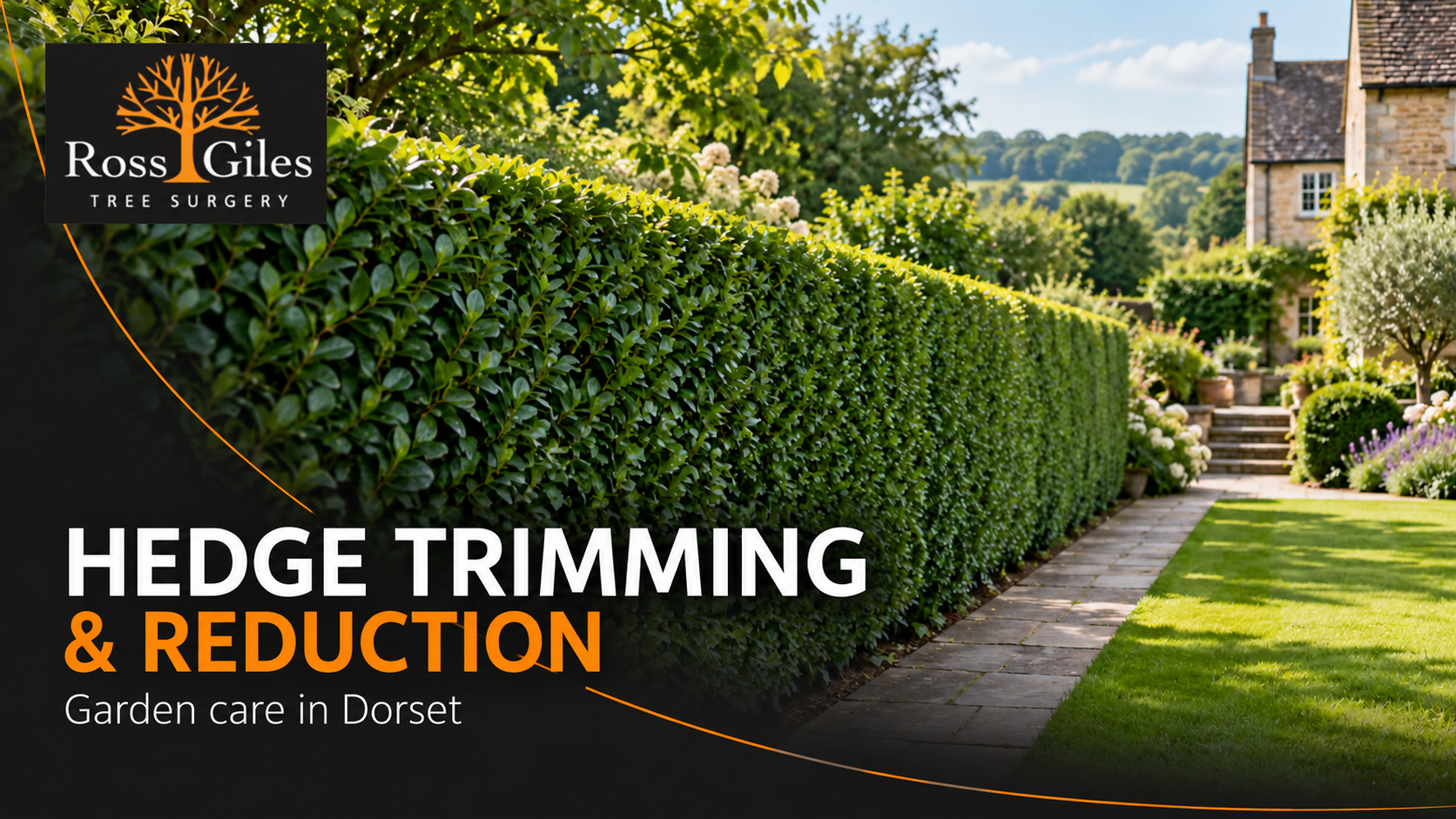
Keep Your Garden Boundaries Neat and Manageable
Hedges provide privacy, shelter and a natural framework for a garden. However, unchecked growth can spread over paths, reduce usable space and make a boundary difficult to manage. Regular attention helps maintain a suitable size without relying on drastic cutting.
At Ross Giles Tree Surgery, we offer hedge trimming throughout Dorset, primarily in Dorchester, Weymouth, Poole and Bournemouth. Whether you need a maintenance trim or advice about an overgrown hedgerow, the starting point is understanding the plants and the result you want.
Trimming and Reduction: What Is the Difference?
The right approach depends on whether you want to maintain an established outline or change the hedge’s overall dimensions. These tasks can involve different amounts of growth removal and different expectations for recovery.
Routine Trimming
Hedge trimming generally focuses on recent growth to maintain an existing shape. It is suited to hedges that are already close to the required height and width but need tidying.
Height or Width Reduction
Reduction aims to make a hedge smaller. It needs careful assessment because cutting into older growth can expose bare areas, and some species have limited ability to recover.
Benefits of a Planned Maintenance Routine
A suitable hedge trimming schedule can help keep growth manageable while allowing the hedge to fulfil its role in the garden. The frequency should reflect the species, growth rate and finish you prefer.
- A more consistent outline: Maintaining an established shape can give garden boundaries a tidier appearance without repeatedly making major changes to their size.
- Clearer access: Managing growth beside paths, gates and driveways helps prevent branches from gradually encroaching on areas used every day.
- Privacy considered: Agreeing the finished height and width helps balance screening with the space and light needed elsewhere in the garden.
- Earlier discussion of problems: Regular attention creates an opportunity to notice bare sections, uneven growth or declining plants before planning further work.
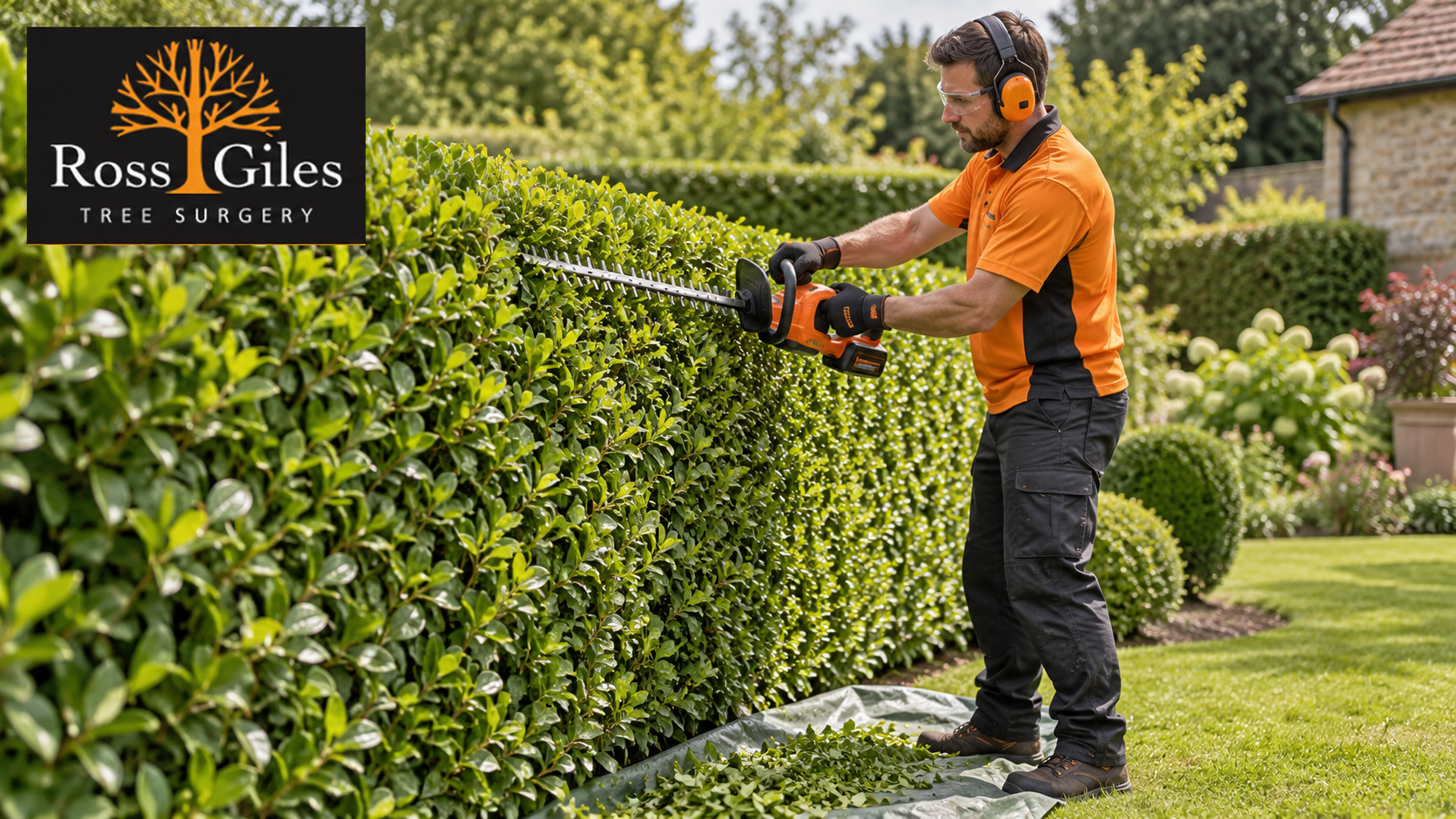
Why Removing Too Much Foliage Can Cause Problems
A green outer surface can hide a woody, largely leafless interior. Cutting beyond that green layer may leave brown patches rather than the neat finish you expected. Most conifers, apart from yew, do not readily produce fresh shoots from old, bare wood.
There is no single reduction percentage that suits every hedge. Species, vigour, previous pruning and the desired dimensions all matter. A reduction of 50% should therefore never be treated as an automatic safe allowance. Some hedges need a more limited approach or a staged plan.
Before arranging hedge trimming for an overgrown boundary, explain whether your priority is a lower height, a narrower profile or a neater outline. This helps establish what is realistically achievable while retaining useful foliage.
Choosing the Right Time for the Work
Timing depends on the hedge species, whether it flowers and the extent of the proposed work. A light maintenance trim and substantial renovation may need different schedules. Ask for advice based on your hedge rather than relying on one date for every garden.
Wildlife also needs consideration. Check carefully for active bird nests before cutting and postpone work that could affect them. A quieter-looking hedge should not be assumed empty simply because no birds are immediately visible.
What to Include in Your Enquiry
Clear information helps the team understand the scale of the work. When enquiring about hedge trimming, share photographs taken from a safe position and describe the finish you hope to achieve.
- Your location and access: Include your Dorset town, access arrangements and any narrow passages or obstacles that may affect reaching the hedge.
- Approximate dimensions: Describe the hedge’s length, height and width as best you can, without climbing or taking risks to measure it.
- The result you want: Explain whether you need a regular tidy, a lower hedge or extra clearance, and identify any screening you want to retain.
- Practical details: Mention adjoining gardens, nearby structures and any visible nesting activity. Ask what clearance and removal of cuttings are included in the quotation.
Read more about our hedge trimming and reduction service or use our contact page to discuss your garden.
Frequently Asked Questions
How often should my hedge be trimmed?
Frequency varies with the species, growing conditions and preferred appearance. Faster-growing formal hedges may need more frequent attention than slower-growing or informal boundaries.
Will brown areas become green again?
Recovery depends on the species and the cause of the browning. Many conifers will not regrow from old, bare wood, so an assessment is useful before making further cuts.
Which areas do you cover?
Ross Giles Tree Surgery provides hedge trimming across Dorset, primarily in Dorchester, Weymouth, Poole and Bournemouth. Contact the team to discuss your location and requirements.
Give Your Hedge the Attention It Needs
From maintaining a tidy outline to assessing an overgrown hedgerow, Ross Giles Tree Surgery can discuss an approach suited to your garden. Explore our hedge care service or get in touch with your location and project details.

