
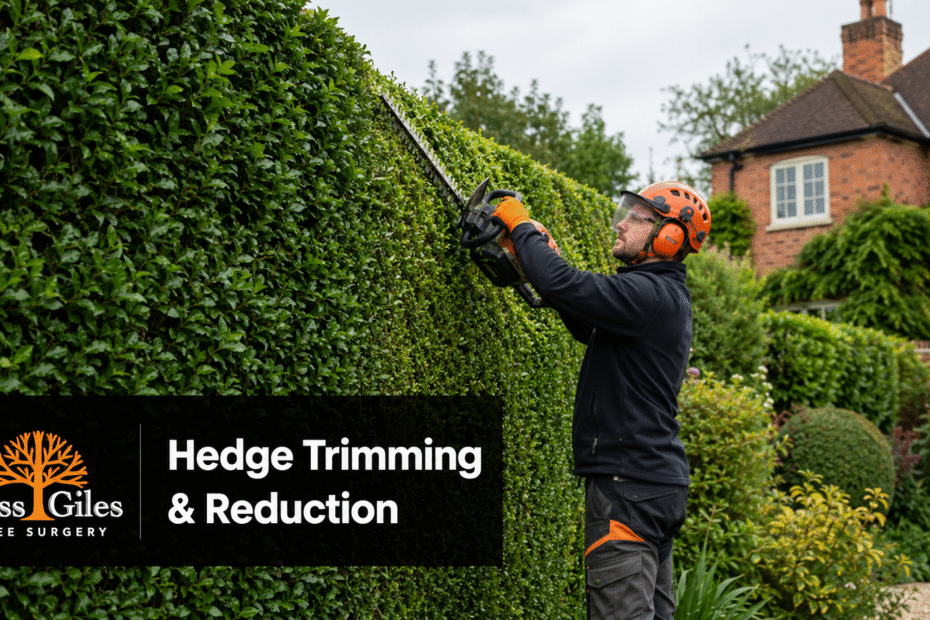
A well-maintained hedge can enhance the appearance, privacy and security of a garden. It can create a natural boundary, provide shelter from the wind and offer a valuable habitat for birds and other wildlife. However, without regular maintenance, hedges can quickly become overgrown, uneven and difficult to manage.
Professional hedge trimming and reduction help control growth while protecting the health and natural shape of the hedge. Whether you need a routine maintenance trim or have a large, overgrown hedgerow requiring careful reduction, using the correct equipment and techniques is essential.
Our experienced arborists provide professional hedge trimming services throughout Dorset, primarily covering Dorchester, Weymouth, Poole and Bournemouth. We approach every hedge carefully, delivering a tidy finish without unnecessarily removing excessive foliage.
What Is the Difference Between Hedge Trimming and Hedge Reduction?
Although these services are closely related, they serve different purposes.
Hedge trimming involves removing relatively small amounts of new growth to maintain the hedge’s existing height, width and shape. It is commonly completed once or several times each year, depending on the species and desired appearance.
Hedge reduction is a more substantial process used when a hedge has become too tall, wide or overgrown. It involves carefully reducing its overall dimensions while retaining enough healthy foliage to support recovery.
A reduction requires additional planning because cutting too deeply into old wood may leave bare areas that recover slowly or, in some species, fail to regrow. The arborist must consider the hedge type, age, condition and previous maintenance before deciding how much material can be safely removed.
Why Is Regular Hedge Trimming Important?
Routine trimming keeps a hedge looking neat, but its benefits extend beyond appearance. Removing excessive growth can encourage a denser structure and prevent individual branches from becoming too heavy or untidy.
Regular hedge maintenance can help to:
- Preserve a balanced and attractive shape
- Control the height and width of the hedge
- Prevent growth from obstructing paths and driveways
- Maintain access to gates, windows and entrances
- Reduce excessive shading within the garden
- Identify damaged, diseased or dead branches
- Prevent the hedge from encroaching on neighbouring land
- Make future maintenance easier to manage
- Support healthy, dense foliage
Allowing a hedge to grow unchecked for several years can make restoration more complicated. Regular light trimming is often healthier for the plant and more manageable than carrying out one severe cut after prolonged neglect.
When Is the Best Time to Trim a Hedge?
The most suitable time depends on the hedge species, its condition and the purpose of the work. Formal hedges may need several light trims during the growing season to maintain clean lines, while informal or slower-growing hedges may require less frequent attention.
Before work begins, the hedge should be checked carefully for active bird nests. Wild birds and their nests are legally protected, so hedge work must not disturb nesting activity. If an active nest is discovered, the affected section should be left undisturbed until it is no longer in use.
Some flowering hedges also require carefully timed trimming. Cutting them at the wrong point in their growth cycle may remove developing flowers or reduce the display during the following season. Professional advice can help determine an appropriate schedule for the particular hedge.
Why Excessive Cutting Can Damage a Hedge
Removing too much foliage in one visit can place considerable stress on a hedge. Leaves allow the plant to produce energy, so severe cutting reduces its ability to support healthy growth and recovery.
Cutting too far into the hedge may leave it looking brown, sparse and stubby. This is especially noticeable in species that do not readily regenerate from old wood. A conifer hedge, for example, may retain permanent bare patches if it is cut beyond the green foliage.
When reducing a large hedgerow, it is generally important to avoid removing an excessive proportion of its height or canopy at once. A reduction of more than approximately half of the hedge can cause serious stress and may lead to internal dieback. For particularly large reductions, completing the work gradually over more than one visit may provide a safer result.
Each hedge should be assessed individually rather than applying the same cutting method to every species.
Signs That Your Hedge Needs Professional Attention
Some hedges simply require a routine trim, while others need corrective work to restore a manageable structure.
You may need professional hedge trimming or reduction if:
- The hedge has become too tall to maintain safely
- Its growth is blocking natural light
- Branches are obstructing a pavement or driveway
- The sides have become uneven or excessively wide
- The top is heavy, irregular or difficult to reach
- Dead or damaged branches are visible
- The hedge is interfering with windows, gutters or buildings
- Previous cutting has left an unbalanced shape
- You no longer have suitable equipment for the work
- The amount of green waste is difficult to manage
Early attention can prevent the problem from becoming more complicated and reduce the need for severe cutting later.
How Professional Hedge Trimming Is Carried Out
Professional hedge maintenance begins with an assessment of the plant and surrounding area. The arborist considers the species, size, overall health, access requirements and desired result before choosing the most appropriate approach.
The work area is then prepared to protect nearby features and provide safe access. Using professional hedge trimmers, hand tools and specialist access equipment where required, the team removes growth in controlled stages.
For formal hedges, guide lines may be used to create a consistent shape. The base is commonly kept slightly wider than the top so that light can reach the lower foliage. This helps reduce the risk of the hedge becoming thin and bare near ground level.
Once trimming is complete, loose cuttings are removed from the top and sides. The surrounding area can then be cleared, leaving the garden tidy and ready to use.
Hedge Reduction for Large or Overgrown Hedgerows
Reducing an overgrown hedge requires more care than completing a light maintenance trim. Large branches may need to be removed individually, and the final dimensions must remain appropriate for the species.
The arborist will determine whether the intended reduction can be completed safely in one visit. If the hedge is old, stressed or extremely overgrown, a phased programme may be recommended.
A gradual reduction allows the hedge time to produce fresh growth between visits. It can also help maintain privacy and avoid creating large bare areas across the canopy.
Where possible, sufficient healthy foliage should be retained to support recovery. The finished hedge may not immediately look as dense as a regularly maintained one, but suitable aftercare and future trimming can encourage a healthier structure.
Choosing the Right Shape for Your Hedge
The best shape depends on the type of hedge and the style of the garden. Formal hedges usually have straight sides and a clearly defined top, creating a smart architectural feature. Informal hedges can retain a softer and more natural outline.
A practical hedge design should also consider:
- The amount of available garden space
- Nearby paths, fences and buildings
- Required levels of privacy
- Access for future maintenance
- Light reaching the lower branches
- The natural growing habit of the species
Trying to force every hedge into a rigid shape may require frequent maintenance and could work against its natural growth. An experienced arborist can recommend a finish that suits both the plant and the property.
Professional Hedge Trimming Services Across Dorset
Our team of arborists has the experience, attention to detail and specialist equipment required to maintain hedges of different sizes and species. We can complete regular maintenance trimming, reshape uneven growth and carefully reduce large, overgrown hedgerows.
Every hedge is assessed before work begins so that we can recommend a suitable level of cutting. Our priority is to achieve a tidy, attractive result while protecting the health and future growth of the hedge.
We provide hedge trimming and reduction services throughout Dorset, with regular work carried out in Dorchester, Weymouth, Poole and Bournemouth.
Arrange Your Hedge Trimming or Reduction
Regular maintenance can keep a hedge dense, controlled and visually appealing while preventing it from becoming difficult to manage. If your hedge is overgrown, blocking light or simply ready for its seasonal trim, professional attention can provide a safer and more consistent result.
Contact our team today to discuss your hedge trimming or reduction requirements. We can assess the condition of your hedgerow, recommend an appropriate approach and complete the work to a high professional standard.

