
Along some village streets, you’ll see lime trees with rounded branch ends and clusters of upright shoots. That shape develops through pollarding, a way of managing the size of suitable trees through repeated pruning. It can help retain trees where space for the crown is limited.
If you’re considering tree pollarding in Dorset, the first question is whether the tree is suitable. Ross Giles Tree Surgery can assess its species, condition and pruning history and discuss how it could be managed over time.
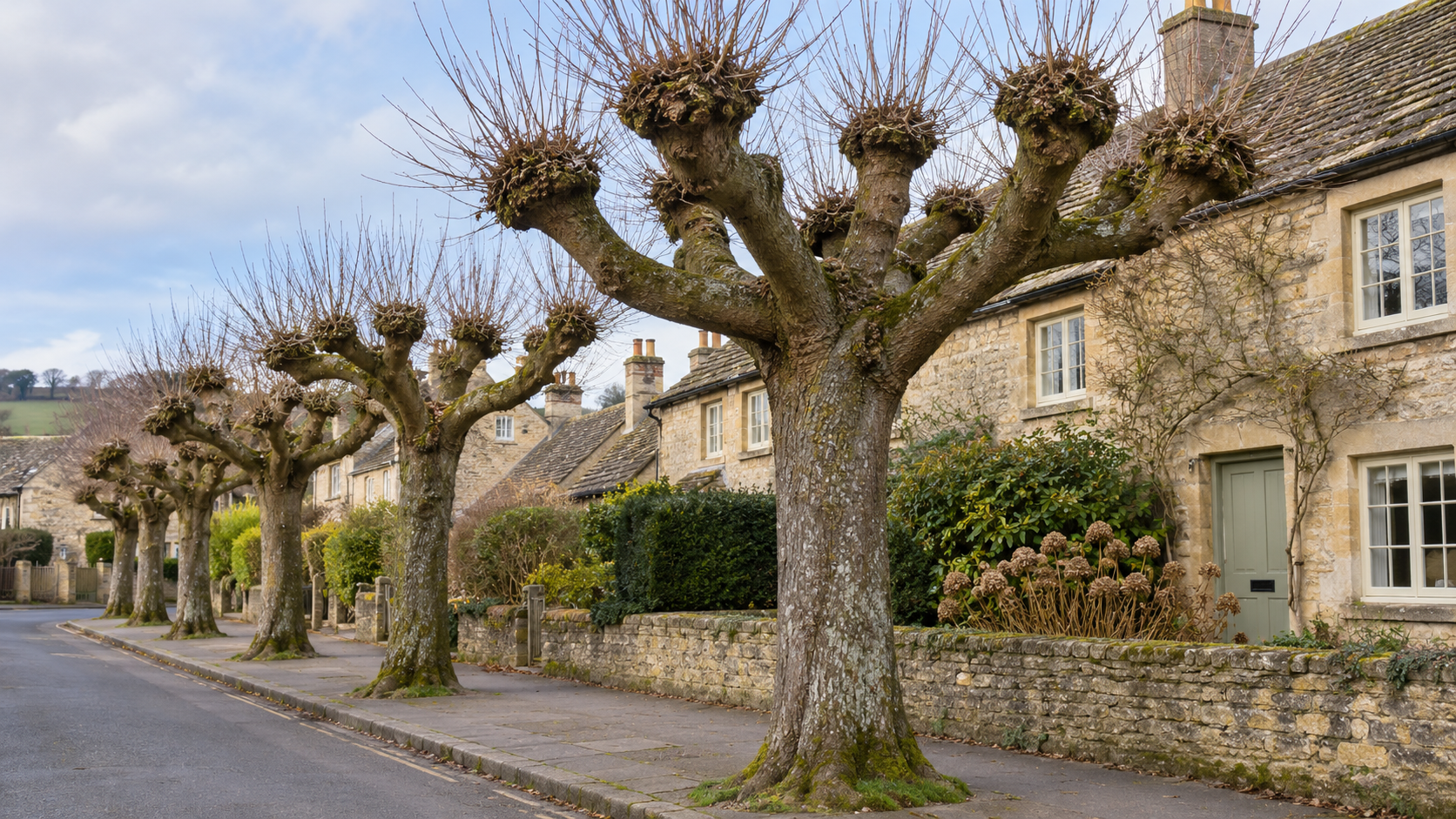
What Is Tree Pollarding?
Pollarding is a pruning method that manages the height and spread of a tree over time. It is usually started while a suitable tree is young. A framework of branches is established, then the shoots that grow from it are pruned on a recurring cycle.
Common lime and London plane are familiar examples of species managed this way, particularly along streets. The approach for an individual tree depends on its age, condition and pruning history. Find out more about our tree pollarding service in Dorset.
What Are Pollard Heads or ‘Knuckles’?
Over successive pruning cycles, the points where shoots grow back can develop into rounded swellings known as pollard heads or knuckles. Several shoots can emerge from the same head, giving established pollards their recognisable appearance.
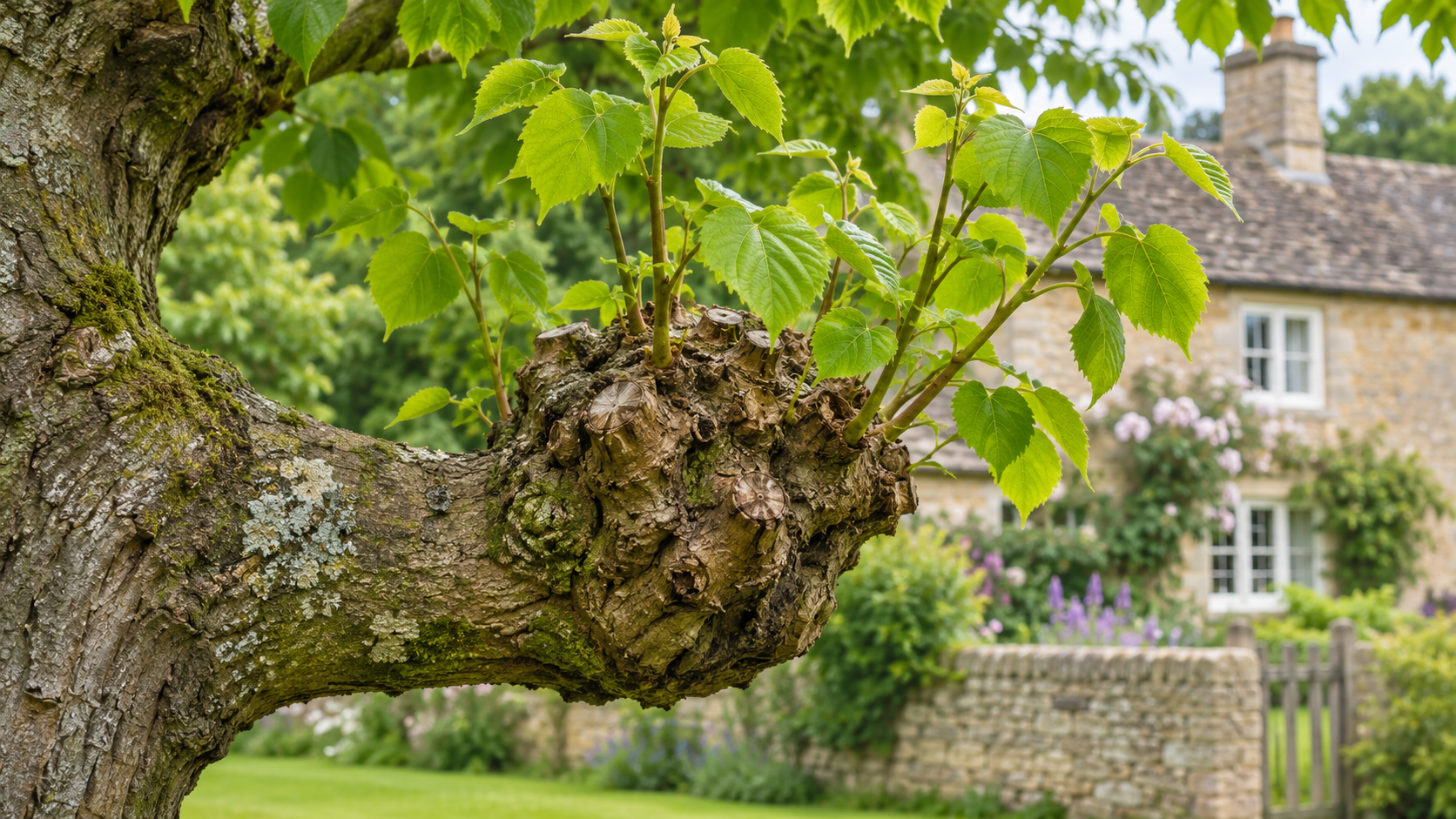
If you can see old pollard heads but the regrowth has become substantial, mention this when you enquire. An assessment can help establish how the tree has responded to previous work and what approach is appropriate now.
When Might Pollarding Be Suitable?
Pollarding may be worth discussing if a tree is already managed on a pollarding cycle or if a suitable young tree needs to be kept within a defined space. If your concern is a mature tree with branches close to a building, tell us what clearance you need and where. A crown reduction or more targeted pruning may be more appropriate, depending on the tree and the site.
There’s no single percentage of crown removal that applies to every tree. Tell us what you’re trying to achieve and share any history of previous work. That gives us a starting point for deciding whether pollarding is suitable and what ongoing maintenance would involve.
What to Share When Requesting a Quote
- Property postcode. Tell us where the tree is and whether it’s in a garden, communal space or beside a road.
- Photos of the whole tree. A view from ground level can show the crown, trunk and nearby buildings.
- Pruning history. Include the date of the last work if known and point out any visible pollard heads.
- Your reason for the work. Explain whether you want to maintain an existing pollard or address a particular clearance issue.
- Site access. Mention narrow gates, shared driveways or restricted access around the tree.
Frequently Asked Questions
Can any mature tree be pollarded?
Suitability varies with species, age, condition and pruning history. If a mature tree has never been pollarded, ask for an assessment before deciding how to manage its size.
How often does a pollarded tree need pruning?
The interval depends on the species, rate of regrowth and the purpose of the work. If you know when the tree was last pruned, share that date so we can discuss a suitable maintenance cycle.
Is pollarding the same as crown reduction?
Pollarding manages regrowth from established pruning points over repeated cycles. Crown reduction reduces the height or spread of the existing crown while retaining the tree’s overall form. The right option depends on the tree and what you want the work to achieve.
Discuss Tree Pollarding with Ross Giles Tree Surgery
Have an established pollard that needs attention or a tree you’d like us to assess? Send us the postcode, a photo of the whole tree and any details of previous work.
Request a Tree Pollarding Quote
